Research Leadership
Colloquium 2026
Advancing Excellence and Integrity in Phygital Doctoral Scholarship
Event Dates
1–5 September 2026
Venue
XLRI Jamshedpur, India
The Research Leadership Colloquium 2026, a centerpiece of the XLRI Doctoral Colloquium, drives thought leadership by uniting scholars, practitioners, and academic heads. This dynamic platform features paper presentations, developmental workshops, and research competitions, fostering a collaborative ecosystem for emerging and established researchers to shape the future of management scholarship.
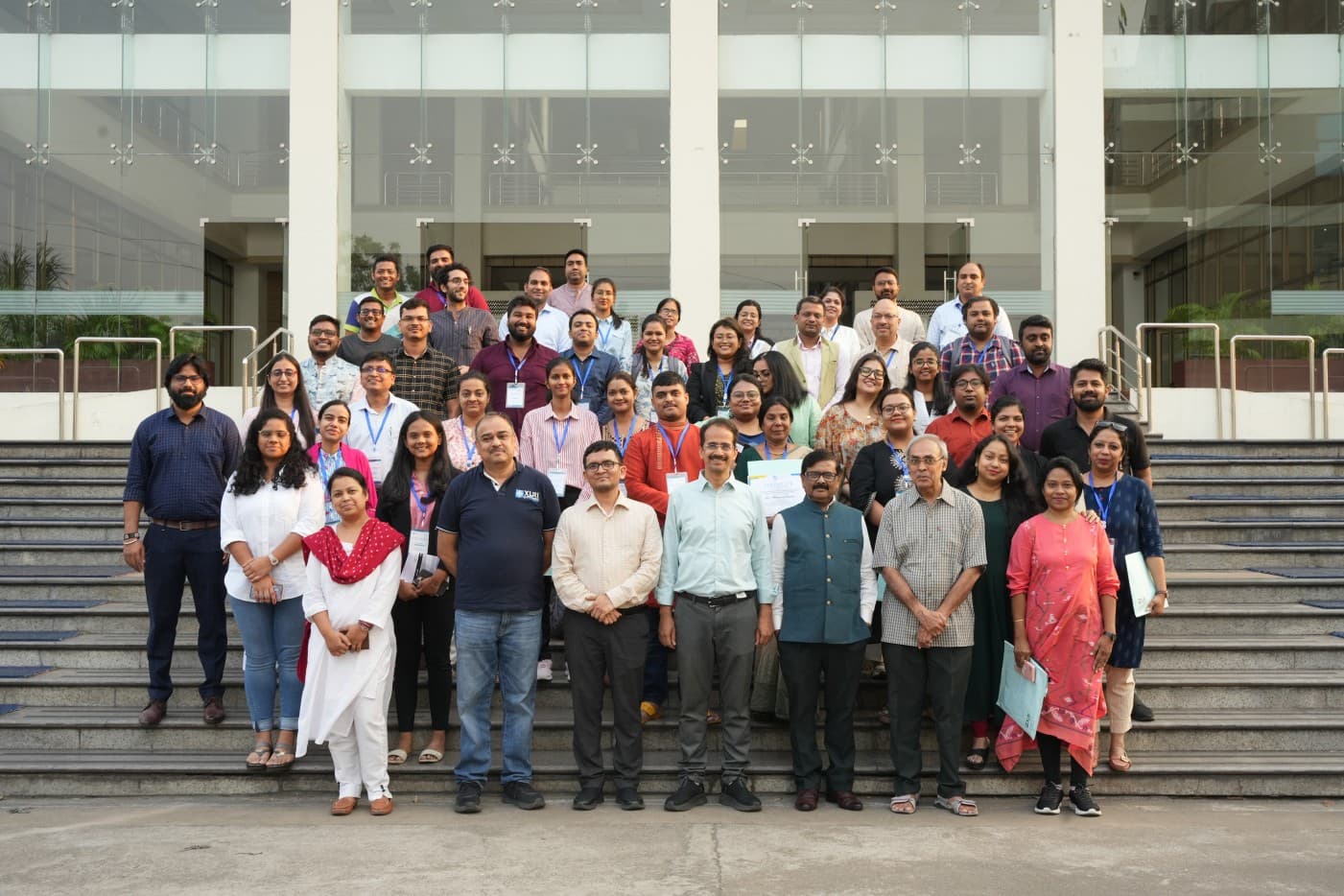
A Call to Academic Leadership
Hosted by XLRI Jamshedpur, this prestigious forum invites 75 distinguished academic leaders—including Vice-Chancellors, Deans, Directors, Heads of Departments, Professor Emeritus, and senior academic leaders from world-class institutions—to engage in transformative thought leadership.
Participants will transcend traditional boundaries to build a shared infrastructure for academic excellence, ensuring their institutions remain at the forefront of global management scholarship and doctoral innovation.
Roundtable Discussion Tracks
Inviting brief papers on frameworks, policies, innovations, cases, or experiences
The Challenge of Doctoral Supervision in Phygital Ecosystems
Supervisory Innovations in AI-augmented academic environments
Supervisory innovations in AI-augmented academic environments are reshaping doctoral education through personalized mentoring, intelligent feedback systems, and data-informed decision-making. By integrating human expertise with AI tools, supervisors can better support research design, progress monitoring, and scholar well-being. These innovations redefine supervisory roles, promote ethical research practices, and enable more responsive, inclusive, and effective academic guidance in increasingly digital and hybrid scholarly ecosystems.
Human–AI Co-Mentoring in Doctoral Education
Human–AI co-mentoring in doctoral education combines the relational strengths of human mentors with the analytical and adaptive capabilities of AI tools. This model supports personalized guidance, timely feedback, and skill development while preserving academic judgment and ethical oversight. By augmenting, not replacing, human mentorship, co-mentoring enhances research quality, learner autonomy, and inclusivity within increasingly digital, hybrid, and global doctoral education ecosystems.
The Challenge of Doctoral Career Futures in an AI-Driven Academy
Doctoral career ecosystems in the Phygital
Doctoral career ecosystems in the phygital context integrate physical academic spaces with digital platforms to support holistic researcher development. These ecosystems connect supervision, mentoring, industry engagement, and global networks, enabling diverse career pathways beyond academia. By blending in-person relationships with virtual opportunities, phygital ecosystems enhance career readiness, mobility, and resilience for doctoral scholars navigating complex, technology-driven professional landscapes.
Hybrid professional identities: scholar–practitioner–innovator
Hybrid professional identities—scholar, practitioner, and innovator—are increasingly central to doctoral education in phygital environments. Doctoral scholars navigate research excellence, applied practice, and innovation simultaneously, requiring adaptive mentoring and supervision. These identities enable knowledge translation, industry engagement, and societal impact, preparing doctoral graduates to operate fluidly across academic, professional, and entrepreneurial ecosystems.
Submit Your Perspective
Each participant is invited to submit a **Brief Paper (approximately 1,000–1,500 words)** by **30th June 2026** to dc@xlri.ac.in.
The paper should be written in a reflective and analytical tone, highlighting institutional perspectives, leadership experiences, and forward-looking insights into doctoral education and supervision.
The submissions will facilitate roundtable discussions and produce a Research Leadership Compendium.
Required Information
- Paper Title
- Author Name(s)
- Designations
- Institutional Affiliations
- Full Contact Details
Why Your Presence Matters

Contribute to the Collective Vision for Responsible Doctoral Scholarship
This event serves as a strategic cornerstone for the future of management education, bringing together academic leaders to shape a collective vision for Responsible Doctoral Scholarship. At its core is a collectively developed framework that outlines essential principles and institutional strategies for fostering ethical, transparent, and rigorous research in the age of AI and phygital transformation. By moving beyond traditional boundaries, this collaborative effort focuses on articulating a shared commitment to research integrity and inclusive scholarship, ensuring that doctoral training evolves alongside global technological shifts. This framework acts as a definitive guide for institutions to strengthen the quality of their research ecosystems, providing a unified roadmap to prepare the next generation of scholars for an impactful and socially responsible academic career.

Contribute to the Research Leadership Compendium 2026
As academic leaders and institutional heads, you contribute to the Research Leadership Compendium 2026 that shapes a collective vision for Responsible Doctoral Scholarship in an era of unprecedented technological shift. By documenting institutional case studies and thought papers, the compendium showcases how the Business Schools leverage intelligent tools to enhance research integrity and scholar well-being without compromising human judgment. Furthermore, it addresses the strategic necessity of preparing scholars for diverse career futures, fostering hybrid identities—the scholar, practitioner, and innovator—that can thrive across academic and entrepreneurial landscapes. This compendium serves as a definitive reference for academic administrators and policymakers committed to advancing the excellence, inclusivity, and future-readiness of global doctoral education.
Identify Premier Doctoral and Faculty Talent for your Institution
Designed to turn the marathon of faculty hiring into a strategic sprint, the “Research Talent Match” (a part of XLRI Doctoral Colloquium 2026) connects you with a curated pool of over 75+ job-market-ready Ph.D. scholars and early-career researchers, and 50+ PhD aspirants. Rather than relying on static resumes, recruiters can attend exclusive private dinners, offering a sophisticated environment for in-depth, one-to-one discussions with the scholars. To ensure maximum efficiency, institutions receive early access to a Digital Candidate Directory two weeks prior to pre-schedule 1-on-1 interviews within private, professional Recruitment Suites. With dedicated tracks for Assistant Professor roles, postdoctoral grant projects, and a PhD Gallery for pipeline building, this colloquium offers a comprehensive ecosystem to secure the brightest academic minds in business management and elevate your faculty's research impact.
Engage with Journal Editors and Academic Leaders
This event provides a prestigious platform for Vice-Chancellors, Deans, and Directors to engage directly with prominent journal Editors and academic peers, fostering a robust ecosystem for collaborative excellence. By transcending traditional institutional silos, leaders can initiate strategic partnerships that drive doctoral mobility, cross-supervision models, and joint research workshops. This network empowers participating schools to align their institutional research agendas with international publishing standards while building a shared infrastructure for high-impact scholarship. Such engagement not only strengthens your institution’s global standing but also catalyzes collective innovation. Ultimately, these high-level interactions ensure your school remains at the forefront of the global academic dialogue, securing a competitive edge in the evolving landscape of management research and doctoral training.
Colloquium Highlights
Research Integrity Panels
Industry-academic-led panel discussions on research integrity and benchmarks for academic excellence
Cultural Celebrations
Cultural activities including celebrations of Janmashtami and Teachers' Day
High-Level Social Integration
Home-hosted dinner at the private residence of a highly distinguished Indian citizen with a simple, multi-course Jharkhandi meal
Tribal Naming Ceremony
A private meeting with Majhi Pargana (tribal elders) where you may receive an honorary tribal name reflecting your wisdom.
Curated Visits
"Explore the rich industrial heritage and tribal culture of Jamshedpur through these select excursions."
National Registration
Participants affiliated with Schools/Universities in India
International Registration
Participants affiliated with Schools/Universities outside India
Contact Us
For participation, collaboration, or partnership inquiries, please reach out to us.
dc@xlri.ac.in